


Most guides to Sardinia will tell you to rent a car for your whole holiday. I think that advice is right about the car, but wrong about the “whole holiday” part. On some days, having a car can make the difference between a great trip and a frustrating day. On others, it just sits outside your hotel while you keep paying for it, and then costs you again when you have to find somewhere to park.
So the question I would actually ask isn’t whether you should rent a car. It’s how many days of your holiday you really need one for. Below, I’ll try to answer that, with a few real numbers too.
The short answer
| Type of trip | Car? | The deciding factor |
|---|---|---|
| City break in Cagliari | No | Train from the airport in under ten minutes for €1.30, walkable centre, buses to Poetto |
| Alghero, old town and nearby beaches | No | Beaches within walking distance of the seafront, plus public transport and organised trips for sights further out |
| Olbia or Golfo Aranci as an urban base | No | Airport buses into town, central railway station, summer trains along the coast |
| Sassari as a city base | No | Well connected to the main cities, with most of the sights concentrated around the centre |
| One base + two or three day trips | Only on those days | This is the compromise I explain in the next section and, for many trips, the one that makes the most sense |
| A different beach every day | Yes | Otherwise the timetable will decide your day for you |
| Farmhouse or countryside stay | Yes | The bus may reach the village, but your accommodation could still be several kilometres further on |
| Barbagia and inland villages | Yes | Reaching one town is one thing. Moving freely between several of them is another |
| Multi-stop road trip | Yes | Luggage, accommodation changes and detours make everything more complicated without a car |
The solution I’d actually recommend: rent a car for only part of the trip
You don’t necessarily have to choose between having a car for the whole holiday and not having one at all. Imagine, for example, six nights in Cagliari:
- Day 1. Arrive, take the train into the city and go for an evening walk around Marina. No car.
- Days 2 and 3. Castello, museums, dinner in Villanova, bus to Poetto. Still no car, and you’re not missing anything.
- Day 4. Pick up a car in the city centre in the morning. Use it for the kind of day that becomes awkward by public transport: Villasimius and the beaches beyond the town, Costa Rei, or an inland route instead.
- Day 5. Keep the car and do the other trip.
- Day 6. Return the car in the morning and spend your last day on foot.
Two rental days instead of six. The same principle can work in other Sardinian cities too, such as Alghero, Olbia or Sassari: arrive by public transport, explore the city, then pick up a car when you’re ready for the more spread-out part of the trip.
Grouping those days together also means one pickup and one drop-off. Rental pricing isn’t always linear, so it’s worth comparing one continuous multi-day rental with several separate one-day bookings rather than assuming one will automatically be cheaper. In peak season, the biggest saving may simply be avoiding expensive rental days when you wouldn’t have used the car anyway.
Before booking, I’d split the holiday into blocks and ask which days are city days and which ones genuinely need freedom of movement. That’s how you work out how many rental days you actually need.
What having a car really costs you, beyond the rental
Parking in summer
At Poetto, Cagliari’s city beach, parking can already be difficult by around nine in the morning in high season, especially around the first stops. More than once I’ve simply given up and gone home because of the parking, and the same applies not only to Poetto but also to other beaches that have become extremely popular in recent years, such as Tuerredda and Mari Pintau. Of course there are paid car parks too, but even those aren’t guaranteed to have space during the busiest periods.
The price can vary quite a lot along the same beach. Take Poetto again: on the Cagliari side, in the busy stretch in front of the racecourse between the sixth and seventh stops, a full day costs €14. A CTM day ticket, which gets you to Poetto and also lets you use the rest of the city network, costs €3.30, so you can use the same ticket for both the outward and return journey.
Some beaches with restricted visitor numbers also require advance booking, and having a car doesn’t get around that. At Tuerredda, for example, booking is compulsory from 2 June to 15 October in 2026 and costs €3 per person. Cala Brandinchi and Lu Impostu also require booking during the regulated summer period. Always check the official website for your travel dates, because rules and booking windows can change from one season to the next.
The roads
The SS131 “Carlo Felice” is the main north-south artery on the western side of the island and is generally straightforward to drive. In some stretches, though, it’s not unusual to run into roadworks and uneven surfaces. The road also still has some at-grade junctions, where a fast dual carriageway meets a normal crossroads, and many of the works under way are related to replacing these.
Secondary and coastal roads are mostly single-lane in each direction, and many of them are genuinely beautiful and enjoyable to drive, both by car and motorbike. In summer, though, they fill up with visitors, local traffic and seasonal workers, so a scenic route can become much slower than it looks on the map and, as you can imagine, less forgiving than a wider multi-lane road.
The final stretch to a good beach can also be narrow or unsurfaced. That’s something worth keeping in mind when you choose your rental cover, because tyres, glass and the underside of the car are exactly the things you don’t want to discover are excluded after you’ve damaged them.
Before renting a car: 5 things worth checking
Conditions vary quite a lot from one rental company to another, so I’d treat these as a checklist before paying rather than as universal rules.
- Your licence. A valid EU driving licence can be used in Italy. If your licence was issued outside the EU or EEA, you’ll generally need to carry the original licence together with either an International Driving Permit or an official Italian translation. Check the specific rule for the country that issued your licence before travelling.
- Your age. Minimum age requirements and surcharges vary by company and vehicle category. Twenty-one is a fairly common minimum, while drivers under 25 are often charged extra or restricted from some vehicle classes. Always check the conditions attached to your actual booking.
- Automatic or manual. If you need an automatic, I’d book earlier. Choice can be more limited than for manual cars (manual transmission is still widely used in Italy and Sardinia) and prices tend to be higher, especially in peak season.
- The excess and exclusions, not just the headline price. Check how much you’d actually be liable for in the event of damage and whether tyres, glass, roof or underbody are covered. Photograph the car from every side at pickup and make sure all existing damage is recorded before you leave. Also check the deposit and payment rules: some companies accept certain debit cards, others apply restrictions, and the card usually has to be in the main driver’s name.
- When and where you collect the car. Compare airport and city offices rather than assuming one will be cheaper. Opening hours and availability can matter just as much as the daily price. For July and August, booking well in advance makes sense, especially if you need an automatic, a specific vehicle class or want to keep the price as low as possible.
Where you can stay without a car
Cagliari
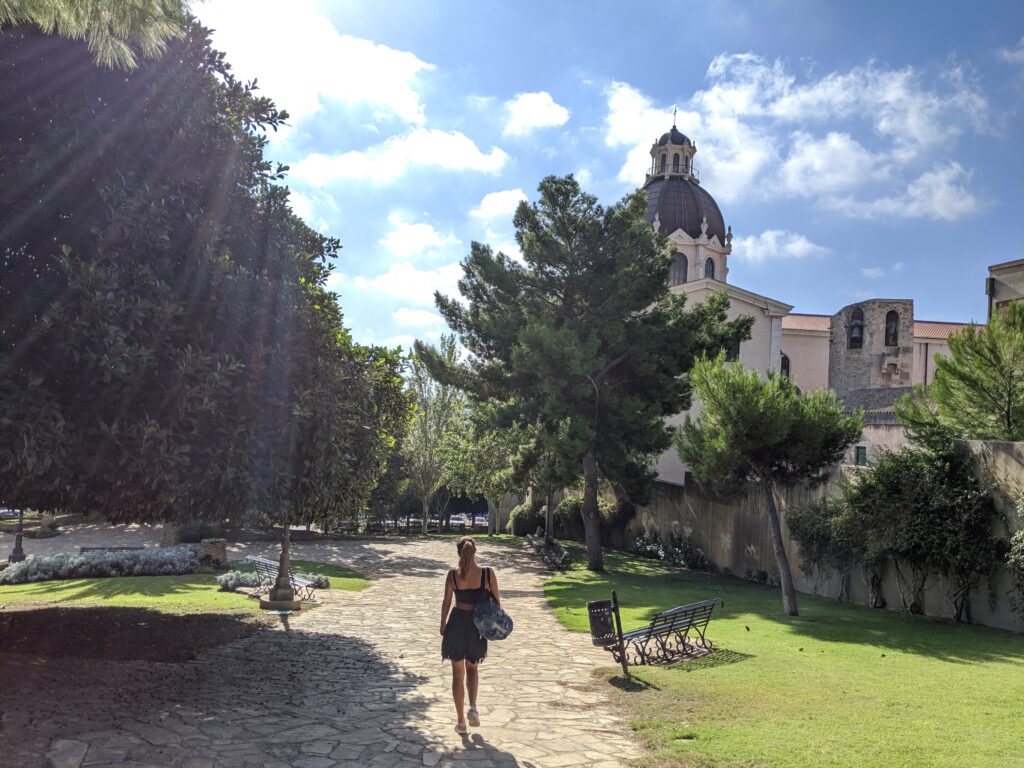
My city, and probably the most obvious choice on the island if you want to visit a larger urban centre or have a base that’s extremely well connected with the rest of Sardinia. Elmas Airport is directly connected to the main railway station in under ten minutes for €1.30 by train (there’s also the Trenitalia app, which lets you buy the ticket online), and the train takes you straight to the station closest to the area most visitors spend time in: Via Roma, the Marina district, the waterfront walk, etc. The centre is easy to explore on foot and the city’s bus network, CTM, covers the neighbourhoods and Poetto.
A quick note on CTM tickets, because the price differences hide a small detail that can be confusing:
with the basic €1.30 ticket, you get 90 minutes of travel on the buses;
with the €2 ticket, you get two hours and access to Metrocagliari, the light rail system, which is not included in the €1.30 ticket (although the routes currently covered by Metrocagliari may not be particularly useful to you as a visitor);
with €3.30, you get 24 hours across the network, while €12 buys you seven days.
In short, for a city stay with only a few trips beyond the metropolitan area, it’s very hard for a car to beat those prices.
Alghero
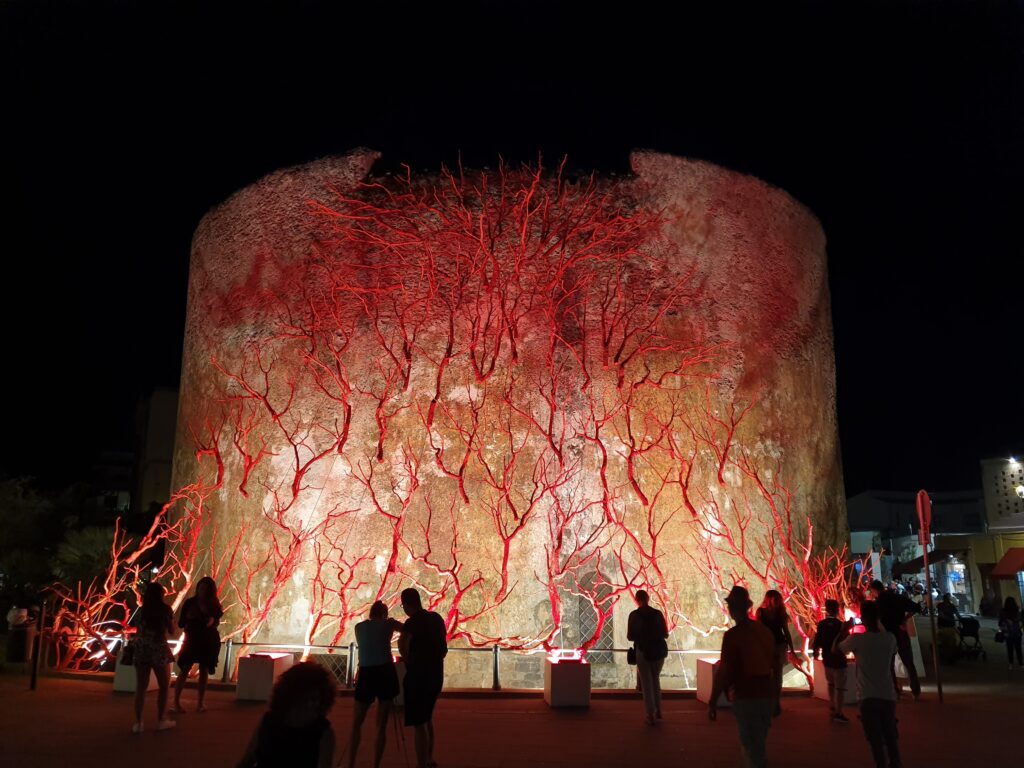
Alghero works well without a car because the beach starts almost at the edge of town. San Giovanni and the Lido are on the city seafront, while Maria Pia, the more “classic” beach option, is only a few kilometres further north.
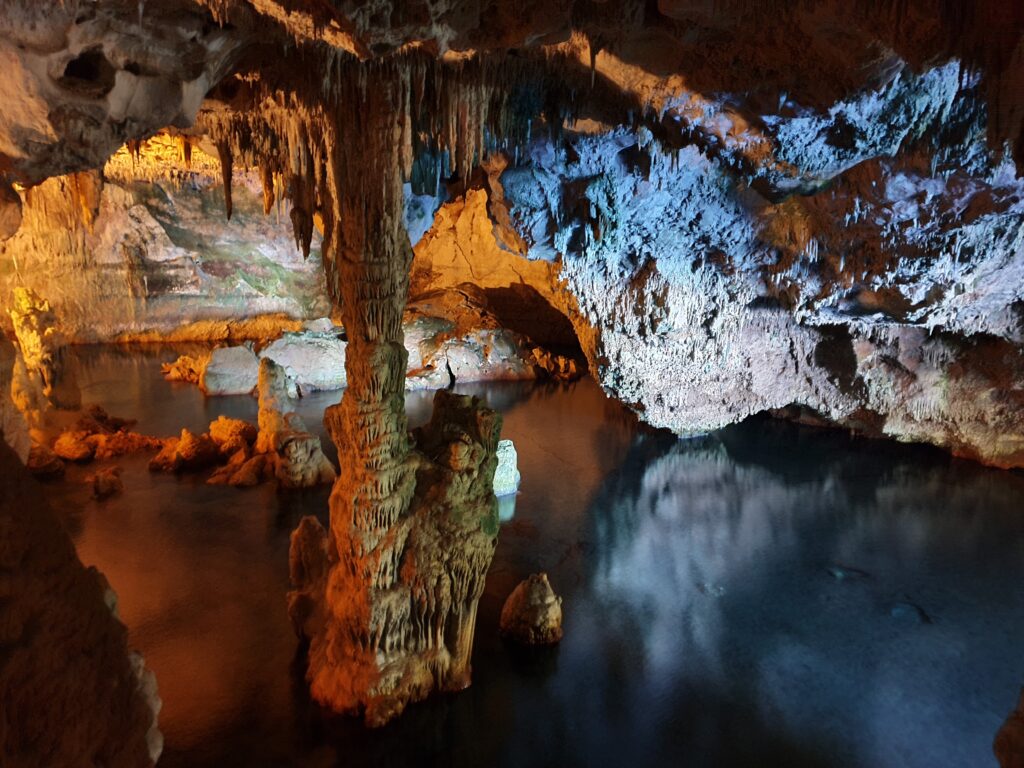
The old town and the bastions are definitely worth your time, but some of the area’s best-known sights are outside the city, including Neptune’s Grotto and Capo Caccia. Even then, though, you don’t necessarily need a car: boat trips leave from Alghero harbour and there are also public transport connections by land. That’s exactly what makes Alghero a genuine car-free base rather than just a compromise.
Olbia and Golfo Aranci
Olbia is one of those places where many people assume they need a car the moment they land. In reality, there are frequent buses from the airport into the centre, the railway station is in town and there’s a rail connection to Golfo Aranci that’s particularly useful during the summer. Obviously, if you want to explore the Costa Smeralda more widely and move around the other high-profile destinations in the northeast, a car is pretty much essential.
I can’t tell you much more than that because, despite being one of the most famous parts of Sardinia among tourists, it’s actually the area I like the least. Not because of the landscape, which is obviously beautiful, but because of the image that’s sold around it and the amount of commercial speculation, which I personally find exaggerated and pretty pointless.
Sassari
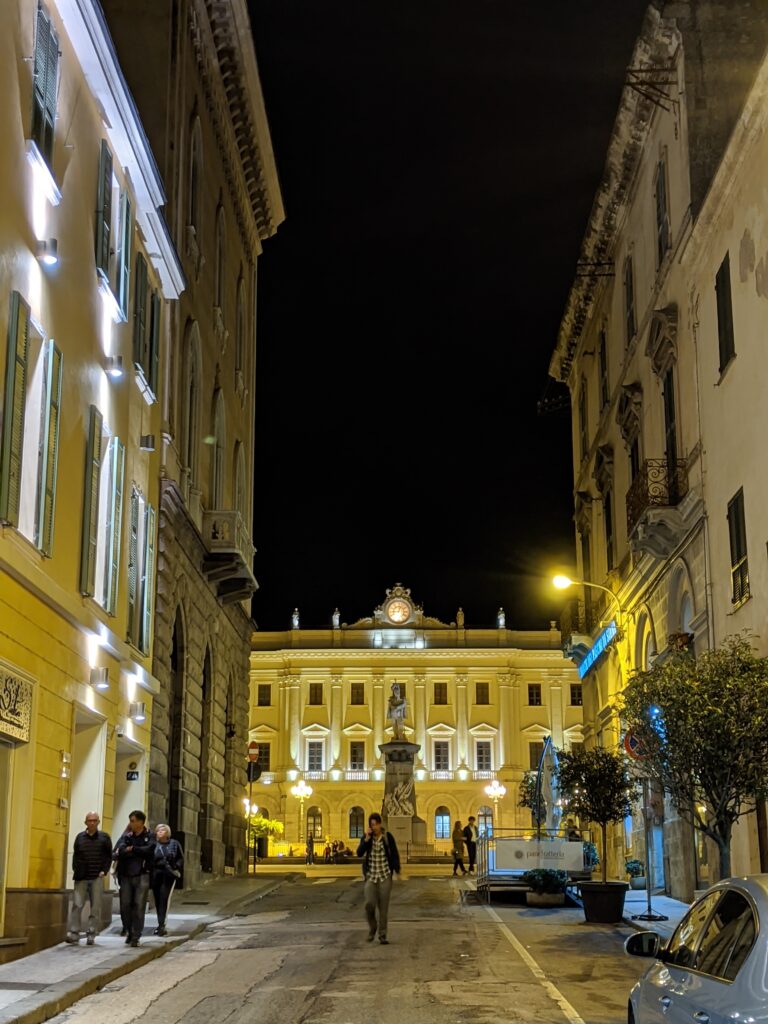
Sassari is rarely suggested as this kind of base and, in my opinion, that’s a mistake. It’s a university city (I lived there for many years during my student days, and it’s also closer to the village where I grew up) that has kept a much more local and less tourist-oriented character than the coastal destinations. It has a historic centre that’s worth exploring on foot, plenty of places to eat and a cultural scene that has gained new spaces in recent years, including the restored Ex Mattatoio complex, where they organise some genuinely interesting events and concerts.
I’ll put the counterargument on the table myself, because you’ll probably come across it while researching: in recent years the centre has developed a somewhat negative reputation because of certain crime stories, perceived problems with urban decline and a general feeling that not enough has been invested in the area. Judge it with your own eyes. In my opinion, there are small streets, views and places of interest that may genuinely surprise you.
So no, Sassari won’t make sense for everyone, especially if the sea is the main reason for your trip, but for a city-focused stay without a car I think it can be well worth considering.
The caveat that applies to all of them
Staying in a city without a car is very different from using it as a base for moving around constantly. Villasimius is a good example: ARST Line 101 connects it with Cagliari and the journey takes around an hour and a half, depending on the service. It’s a perfectly valid option if you know where you want to go and you’re happy to organise the day around public transport timetables, but much less so if you want to leave whenever you feel like it, change beach halfway through the day or stop somewhere on the way back.
There are two other situations where I’d stop resisting and simply rent a car: a countryside or farmhouse stay, where the last mile can easily turn into five kilometres along a rural road, and inland Sardinia, including Barbagia. Nuoro is absolutely not impossible to reach without a car: it’s connected with the rest of the island, and the Macomer–Nuoro rail connection was fully restored in 2026. But getting to the main city in central Sardinia and spending four days moving between villages, trailheads and rural accommodation are two very different trips, and for the second one you definitely need a car.
How I get around, for what it’s worth
Since I’m telling you not to take the advice you read everywhere too literally, I should at least tell you how I get around myself. I mainly work from home, so during the week the car barely moves. Inside Cagliari I use CTM, which I find comfortable and fairly punctual. I use the car to leave the city: beaches, nearby towns and villages, or other parts of the island. And paradoxically, I use it less in the city in summer than in winter, because traffic around the port area gets chaotic and, honestly, I like walking.
Poetto is the exception, and I’ll admit the inconsistency: I live five or ten minutes away, so I often drive there. But there’s a reason for that too: the pedestrian route that would take me there in around 30–40 minutes isn’t particularly safe in a few sections and, especially in summer, there are a lot of cars along that road. In my opinion, it’s simply not worth the risk.
I do, however, go early in the morning or late in the afternoon, because I prefer the beach when it’s less chaotic and because I can easily find free parking. That said, I’m not exactly a die-hard summer beach person, so I only go when I genuinely feel like it.
My partner Barbara is pretty similar to me, although she likes the beach a little more. So when we want a beach day without going too far, we often choose Kal’e Moru: a wider beach, parking right next to the sand, paid but literally there, and a kiosk without the whole organised beach-club setup. If we want to stay even closer, we choose the Quartu side of Poetto, where the beach gets wider. It’s less attractive and more seaweed tends to collect in the water, but there’s more space and parking is almost never a problem.
But, as I said, when it comes to “beach life”, I’m probably not the best person to copy.
Who runs the buses, trains and ferries
I don’t want to start one of the endless arguments about public transport in Sardinia. It’s one of those subjects that gets both locals and newcomers equally worked up. What I can say is that it has improved since I was a child. I didn’t grow up in Cagliari, I’m from the north of the island and only came down here from time to time, so this is an impression based on my own experience: buses seemed less frequent and less punctual than they do now.
Today, many stops have displays with live arrival information and the fleet includes more modern, electric and air-conditioned vehicles too. Delays still happen, obviously, some stops have no shelter at all, which you’ll definitely notice in July, and frequencies can change on public holidays, even when Google Maps confidently tells you a bus is coming. If you’re here for the Sant’Efisio festival on 1 May or Ferragosto on 15 August, check the actual service for that specific day rather than blindly trusting good old Big G.
The names you’ll come across most often are these:
Trenitalia for the main railway connections and the Cagliari-Elmas airport route.
ARST for much of the intercity bus network, some local railway lines and the airport-city connection in Alghero: this is the name to check especially when you’re travelling outside the main urban centres.
CTM for the Cagliari metropolitan area, including Poetto.
ASPO for Olbia’s urban transport network and airport connection. I’ve never used it personally, so I can’t compare it directly with Cagliari.
Delcomar for some scheduled ferry connections, including Palau–La Maddalena and the routes to Carloforte. It’s useful to know if you’re planning to visit one of Sardinia’s smaller islands.
What about Uber?
Uber works in some parts of Sardinia, including Cagliari and Olbia, but not necessarily in the way many travellers expect. In Cagliari, for example, the app can be used to request licensed local taxis through Uber Taxi, so it mainly works as a way to find and pay for a regular taxi rather than as a separate network of private drivers.
Italian rules mean that drivers operating through these services need the appropriate taxi or NCC authorisations. So don’t assume the Uber experience will be identical to what you’re used to in other countries.
It can still be useful if you already have the app on your phone. But don’t assume it covers the whole island: outside the main urban areas, check the app first.
If you want a second opinion on your itinerary, leave a comment with your dates and where you’re staying, and I’ll do my best to help.
